| |
| A $1 Trillion IPO |
| By Jeff Brown, Editor, The Bleeding Edge |
| |
How ironic… |
| The company that started out in 2015 as a private non-profit with the mission to develop artificial intelligence (AI) technology safely and eschew the prioritization of profits… is now gearing up for an IPO at potentially a $1 trillion valuation. |
| It is such a wild story that I suspect will only get more interesting. |
| A few years after OpenAI was founded, it shocked the industry when it threw AI safety and its non-profit status out the window. |
| The move was masked, of course, by a superficial non-profit oversight of the for-profit OpenAI entity. |
| This sharp change in direction was the impetus for Elon Musk – one of the original founders of OpenAI – to disassociate himself from OpenAI and engage in a legal battle over OpenAI CEO Sam Altman's bait-and-switch maneuver. |
| And the motivations for that sharp redirection are becoming clearer by the minute… |
| A Corporate Restructuring |
| This quarter, OpenAI made some additional adjustments to its corporate structure, putting the now formally named OpenAI Foundation as the non-profit entity that supposedly "controls" the for-profit OpenAI Group. |
| The OpenAI Foundation owns 26% of the OpenAI Group and also has a warrant to receive additional shares if the OpenAI Group hits certain milestones. |
| These types of corporate structuring moves are clearly designed to prepare OpenAI for what's next. And with the company already trading in the secondary markets at $500 billion this October, going public is the only logical path. I don't believe anyone could afford an acquisition of OpenAI. |
| So it wasn't a surprise to read that the company is gearing up to file for an IPO in 2026. The company has been having preliminary discussions, and it looks like they will raise at least $60 billion in the IPO, targeting a valuation of upwards of $1 trillion. |
| For perspective, the largest tech IPO in history is currently China-based Alibaba's $25 billion IPO at a $175 billion valuation in 2014. |
| Alibaba was the second-largest IPO in any industry, the first being nation-state-backed Saudi Aramco's $29.4 billion IPO at a $1.7 trillion valuation in 2019. Technically, Saudi Aramco was an IPO, but Saudi Arabia still owns about 97% of the company. |
| Last month, OpenAI CFO Sarah Friar stated publicly that an "IPO is not in the cards right now," in hopes of dispelling the leak of those preliminary IPO discussions. |
| But it was too late. The news was already public. |
| |
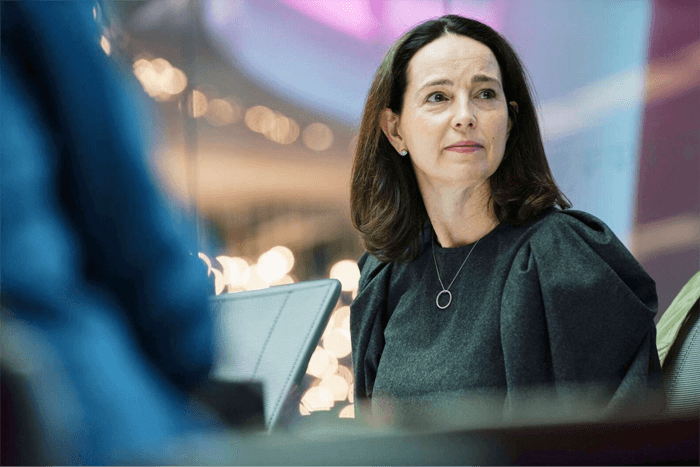
| OpenAI CFO Sarah Friar | Source: Business Post |
| Instead, she emphasized the need for continued investment in AI infrastructure and suggested the U.S. government backstop loans for the AI buildout. OpenAI's motivation for the backstop is to increase its borrowing capabilities. |
| Many cried "bailout," but the CFO wanted that kind of guarantee to reduce OpenAI's cost of debt. A government guarantee would basically make the debt risk-free, but she won't get the guarantee – or a bailout, for that matter – which raises an interesting question… |
| OpenAI has already committed about $1.4 trillion to building out data center capacity, yet it has only raised about $64 billion to date. We might say it's a little short. |
| A $100 billion or more IPO won't cover the gap, but it would be a whole lot more than it has raised. Given the name value of OpenAI, the hype, and global adoption of ChatGPT, sadly, I don't think many retail investors would think much about the valuation of the offering and whether or not it made sense. |
| A massive IPO – and a subsequent run-up in share price – would give OpenAI the ability to raise even more capital in a secondary offering after the IPO. |
| |
And from my perspective, OpenAI will not be the first to achieve artificial general intelligence (AGI). I've already called my horse in that particular race. Imagine how hard it will be to raise capital once it loses? OpenAI would be smart to access the public markets before everyone figures it out. |
| Microsoft now owns 27% of OpenAI. Its $13 billion investment is now worth about $135 billion on paper. Not a bad return at all. |
| Softbank's Masayoshi Son lamented selling his NVIDIA shares to fund a large bet on OpenAI and some other AI companies, a decision he may very well come to regret even more deeply in the years ahead. |
| Current estimates for OpenAI revenue are around $29 billion for 2026, which would put a $1 trillion IPO valuation around 35 times annual sales for a deeply unprofitable company with more than $1 trillion in capital commitments. |
| That's a very inflated valuation… but one that OpenAI's numerous well-heeled institutional investors would be happy to sell their shares at. |
| Then again, perhaps OpenAI won't be the first "real" $1 trillion IPO… |
| America's $100 Trillion Heartland Revival The American dream is coming alive again in our Heartland thanks to a strange new technology… Jeff Brown says this "Heartland Revival" could unleash $100 trillion in wealth and mint new millionaires all across the nation. And he just headed to a dying coal town in Wyoming to investigate. What he found will shock you. Click here to see his video and discover how to play this new trend.
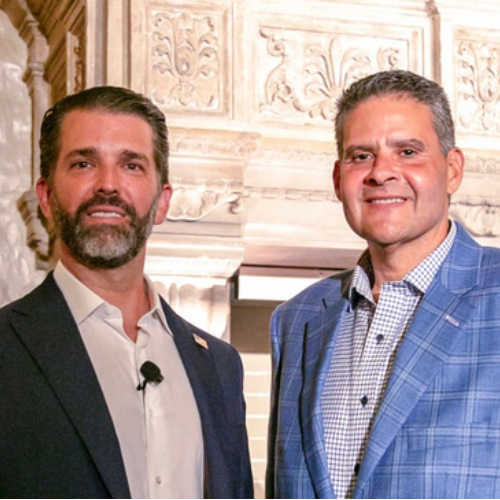
LAST CALL – RSVP TODAY Our America First Summit will kick off LIVE in less than 48 hours. This is your LAST CHANCE to register to join us live. And you don't want to miss this. Trump's America First policies have already sent infrastructure stocks soaring as high as 1,200%… 2,000%… and even up to 260% in a single day! Ex-Wall Street CEO Dylan Jovine spent the last months talking to policymakers… VC insiders… and defense experts. He even had a private meeting with Donald Trump Jr. And on Thursday at 1 p.m. ET , he'll go live to reveal five America First stocks that insiders are buying RIGHT NOW. Including one that could soon hold a monopoly over the largest-known critical minerals deposit in the world (it's currently trading for under $10!). Click here to RSVP in a single click.
(When you click the link, your email address will automatically be added to the event's guest list.)
| |
| The Real $1 Trillion IPO to Watch for |
| Shortly after all the excitement about OpenAI's money hustle, last week brought the possibility of an even more exciting, and healthy, $1 trillion IPO… SpaceX. |
| The discussion started as SpaceX began its process of conducting a secondary sale of SpaceX shares at an $800 billion valuation. If the secondary offering moves forward around this level, it will officially strip OpenAI of its status as the most valuable private company in the world, ceding the title to SpaceX. |
| SpaceX conducts these sales twice a year, allowing its investors and employees to gain access to liquidity by selling some of their shares to interested investors. With each secondary sale comes an updated valuation. |
| Unlike OpenAI, SpaceX is a very healthy business. Forecasts for 2026 for just its Starlink business are about $15.9 billion in revenue, $11 billion in EBITDA, and $5 billion in free cash flow. |
| In addition to Starlink, there will probably be $4-5 billion more in revenue associated with its launch services. |
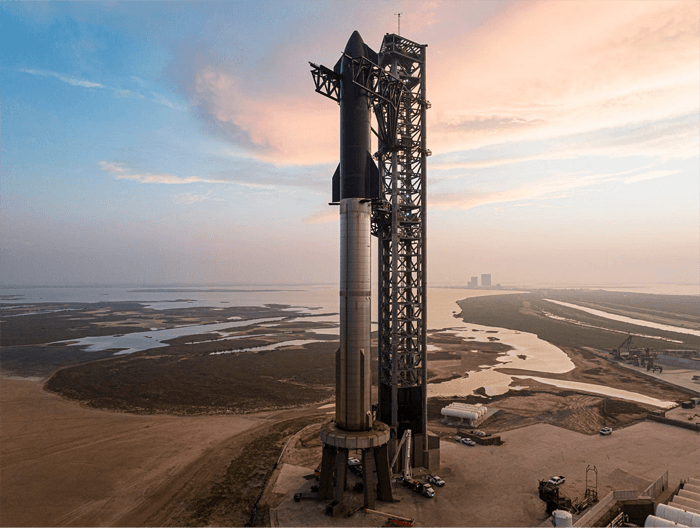
| Next year will be a big one for SpaceX with the commercialization of the giant SpaceX Starship, generation 3, which is set to fly for the first time early next year. |
| |
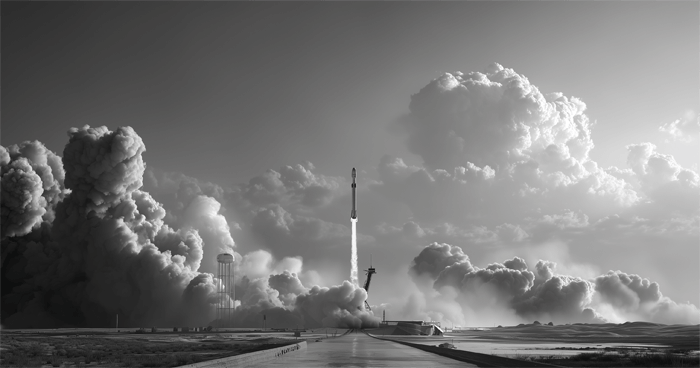
| SpaceX Starship Version 2, predecessor to Version 3, launching in early 2026 | Source: SpaceX |
| SpaceX is already responsible for launching 90% of the global mass launched to low Earth orbit (LEO) this year. Once the Starship is launching regularly, that number will quickly rise above 95%. |
| SpaceX's strategy has been to offer the lowest costs per kilogram into orbit, and by doing so, it radically increases the size of the space economy. SpaceX is the most important aerospace company in the world, enabling an entire industry. |
| And it will culminate in 2026 by sending an uncrewed Starship to Mars. I can't imagine a better time to launch an IPO. |
| Who knows if either company will make it to an IPO next year, but one thing I am sure of, if one or both companies have $1 trillion IPOs, it will ignite an IPO frenzy that has been years in the making. |
| There are simply too many massive, exciting tech companies that have been private for far too long and would benefit from being publicly traded companies. With a healthy economy, strong market conditions, and interest rates coming down significantly next year, the IPO window will finally be open. |
| We have so much to look forward to… |
| Jeff |
| |





0 التعليقات:
إرسال تعليق