| | | Managing Editor's Note: Volatility is brewing in the markets… | | It's great news for our colleague, Larry Benedict. Larry's been trading choppy markets for more than 40 years. He's made a career out of taking advantage of volatile setups to book double-digit gains, time and time again, sometimes in just days or weeks. | | And now, he's revealing his go-to strategy for these sorts of market conditions in his upcoming Get Rich Slow event. This Thursday, January 15, at 8 p.m. ET, he'll reveal the full picture of the shift that's shaking up the markets… as well as his favorite way to take advantage. |
| | Alien Atmospheres | | | |
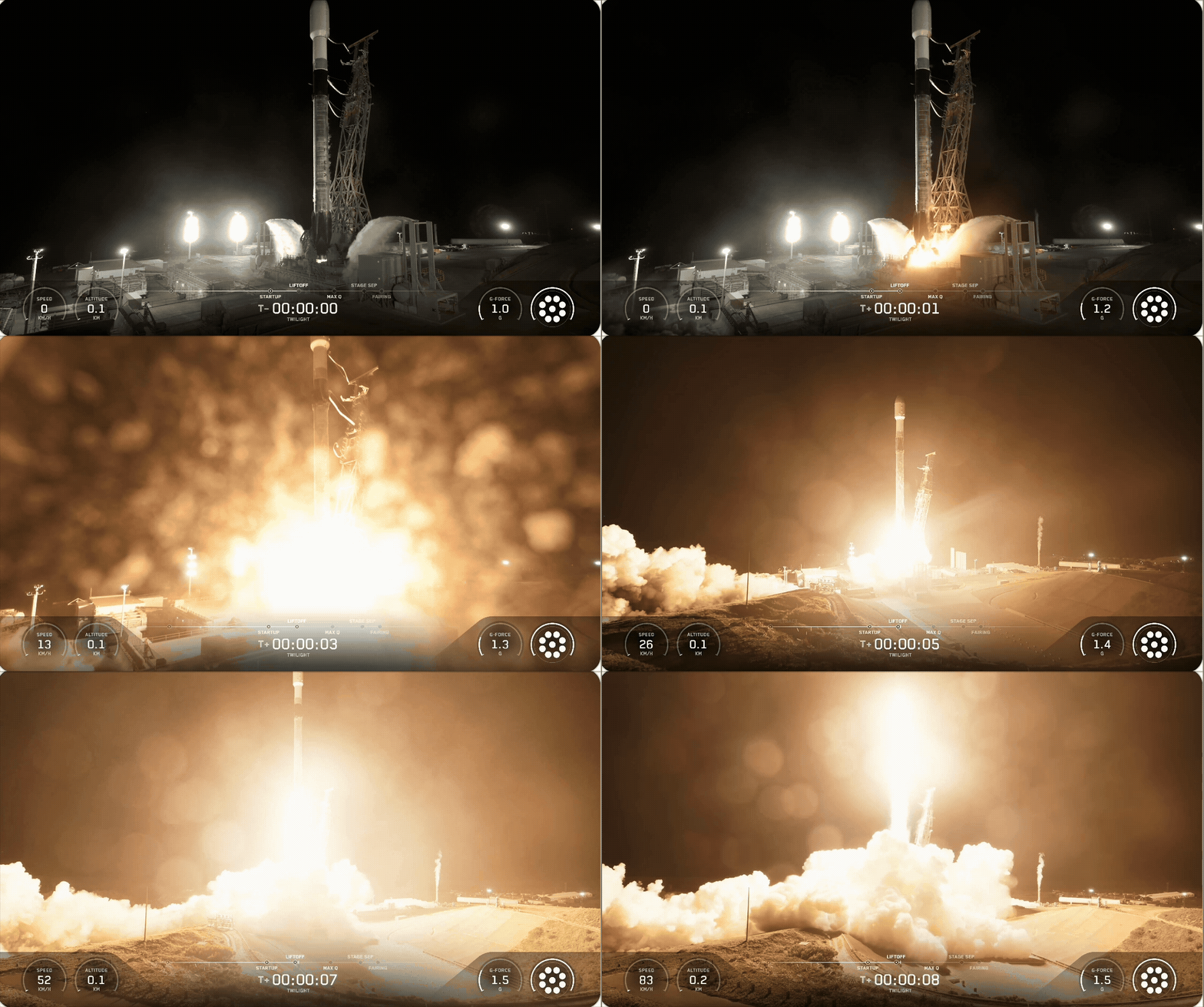
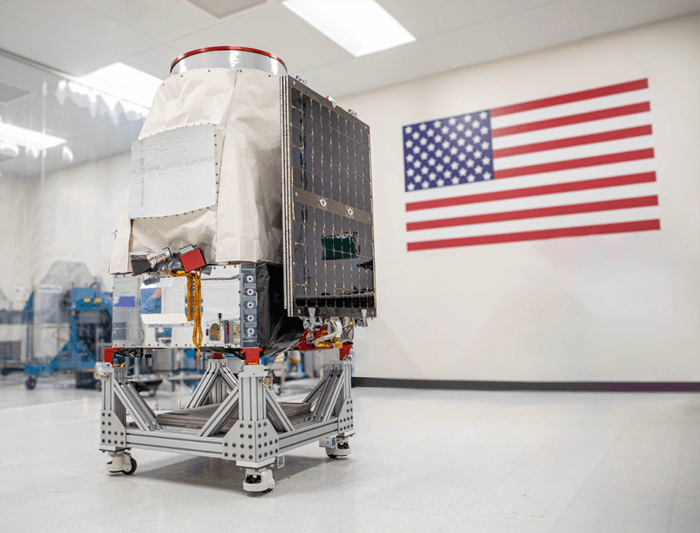
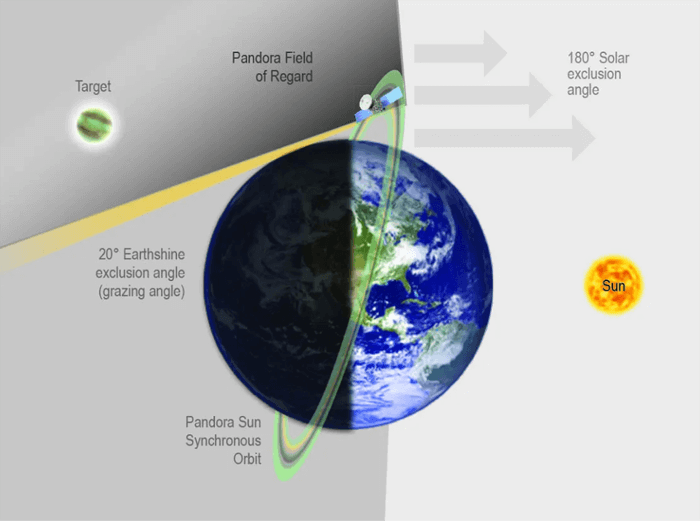
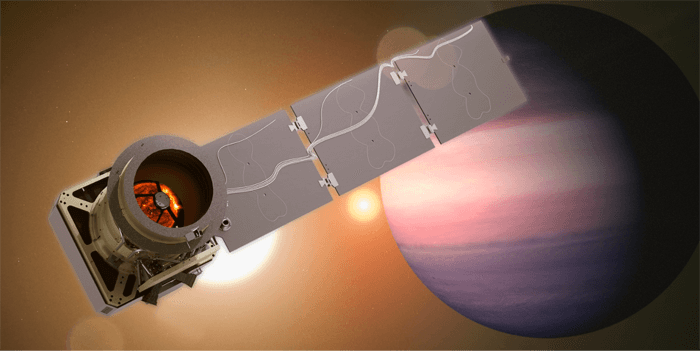
Early Sunday morning, a SpaceX Falcon 9 lifted off on one of the most interesting and symbolic missions to space. | | It was dubbed the Twilight mission, as it delivered its payloads into a sun-synchronous orbit. | | This put the satellites in something akin to a continuous, dusk-dawn placement in low Earth orbit… | | | | SpaceX Falcon 9 – Twilight Mission Lift Off | Source: SpaceX | | The benefit of a sun-synchronous orbit, which we have explored in previous issues of The Bleeding Edge, is the ability to have constant sunlight exposed on the satellites, which feeds solar panels for power. | | Consistent, free energy in space. | | Exciting… | | The headline mission getting the most attention isn't the Twilight mission itself, but NASA's Pandora mission. | | Staring Into Space | | The Pandora missions have been developed to explore the alien atmospheres of exoplanets and look for signs of potential life. | | | | NASA's Pandora spacecraft | Source: NASA | | NASA will be targeting the analysis of at least 20 attractive targets in the first year of operation. | | The scientific approach is to analyze the alien atmosphere as the planet passes in front of its own solar system's star. | | | | Pandora's Sun-Synchro us Orbit | Source: NASA | | As the local star's light passes through the atmosphere, it reveals the composition of the atmosphere as different elements and molecules absorb light at specific wavelengths. | | NASA will be targeting exoplanets that have atmospheres that are already known to be rich in water or hydrogen. | | | | Artist Rendering of Pandora spacecraft deployed | Source: NASA | | Performing this kind of analysis on the alien atmospheres of exoplanets requires "long stares" at each target exoplanet and its local star. | | That's why the Pandora mission is so exciting. | | This kind of long-duration analysis of individual targets is very difficult to schedule using the James Webb Space Telescope, due to how high demand there is for using its platform for a wide range of research. | | That is the benefit of having a dedicated spacecraft designed explicitly for this purpose… | | Recommended Links
Thursday, January 15, 8 p.m. ET
Join Larry Benedict for Get Rich Slow Up one day… Down the next… It's been a wild ride for stocks and Bitcoin over the past couple of months. And if you are concerned about this increasing turbulence, then this is the must-see event of 2026… Because former hedge fund manager Larry Benedict has discovered how to collect ongoing income from these wild price swings, like: - Apple → 27% in 1 day… 29% in 2 days… and 57% in 12 days
- Nvidia → 22% in 3 days… 47% in 6 days… and 66% in 4 days
- Bitcoin → 33% in 31 days… 47% in 7 days… and 50% in 5 days
- Meta → 25% in 1 day… 86% in 20 days… and 134% in 2 days
- Strategy → 36% in 83 days… 39% in 1 day… and 53% in 19 days
- Tesla → 23% in 2 days… 38% in 6 days… and 82% in 4 days
On Thursday, January 15, 8 p.m. ET, Larry will reveal how. And give away his full playbook for getting these results. Click here to see the details…
(When you click the link, your email address will automatically be added to Larry's guest list.)
Elon's Greatest Invention… Hidden in South Memphis? Tech legend Jeff Brown recently traveled to the industrial zone of South Memphis to investigate what he believes will be Elon's greatest invention ever… Yes, even bigger than Tesla or SpaceX. Click here now because after February 1st, it could be too late.
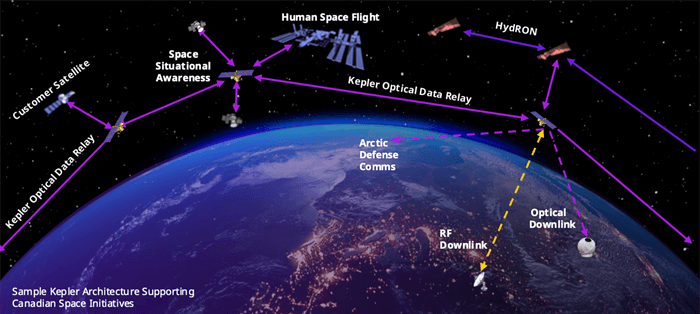
| | | Better, Faster, Cheaper | | In addition to the potential of finding indications of alien life, one of the most incredible facts about the Pandora mission is that it is part of NASA's Astrophysics Pioneers program. | | This means that the spacecraft cost only $20 million to build and get to the launch pad. | | That's not a typo. | | It didn't cost $2 billion or even $200 million. | | Just $20 million, plus the cost of SpaceX's launch services to low Earth, sun-synchronous orbit. | | I'd estimate the cost to launch Pandora at around $1 million on a SpaceX Falcon 9 rideshare. | | At 325 kilograms and a cost per kilogram to low Earth orbit (LEO) of around $2,700 on a Falcon 9, that puts us just under $1 million. | | The Pandora mission stands in stark contrast to the "old way" of doing things at NASA – bloated, over budget, and taking far too long to get missions into orbit/space. | | I'm passionate about space science and aerospace technology, and I'm also passionate about fiscal responsibility. | | If we can do things better, faster, cheaper, we should. | | And that's what the New NASA is looking to achieve under the leadership of NASA's new administrator, Jared Isaacman, who was just sworn in on December 18, 2025. | | Despite the excitement around the Pandora mission, there was something far more symbolic about the Falcon 9 mission – the Twilight Mission. | | The Power of a Sun-Synchronous Orbit | | Regular readers of The Bleeding Edge will understand the significance of a successful mission to a sun-synchronous orbit… | | Orbital data centers. | | As we can easily visualize in the earlier image that shows a sun-synchronous orbit, a satellite's solar panels are able to have direct and constant exposure to the sun, something that would be required to power in-orbit compute. | | The thought of data centers in space is hard to imagine – if we think about massive buildings with row upon row of interconnected server racks. | | | | | In space, data centers – regardless of their shape – don't require expensive and bulky cooling systems or massive amounts of electricity fed from a nuclear power plant or natural gas turbines. | | | | Clearly, it's not possible to launch a massive building into space. | | But large satellites, or tiles with computational resources on one side and solar panels on the other, are feasible and economical… | | Especially when considering the radical decline in launch costs with SpaceX's Starship, which will result in launch costs per kilogram dropping by more than 90% compared to the cost using a Falcon 9. | | The SpaceX Twilight mission was a rideshare mission, so Pandora was only part of the payload. The rest was commercial. | | And a big part of the mission was 10 Kepler Communications Aether spacecraft. | | Space Internet | | Kepler is a private company out of Toronto. It has a self-proclaimed mission to "build the internet for space." | | And that is exactly what it has begun doing with this latest mission. | | Each Aether spacecraft is capable of optical transmission from one spacecraft to another. | | The spacecraft also has multi-GPU capabilities with terabytes of storage. | | This enables each spacecraft to provide GPU-based computational resources in space. We can think of each spacecraft like a rack of GPUs in orbit. | | | | Kepler's Space-based Internet Infrastructure | Source: Kepler Communications | | This capability enables Kepler to receive data from other satellites or space stations, process that data, and send the results back to Earth. | | This is the beginning of a vibrant space economy – with multiple service providers facilitating space-based web services. | | Worth noting is that this service will compete with SpaceX's Starlink network, among other companies that I've mentioned in The Bleeding Edge in the past, like Relativity Space and Sophia Space. | | To SpaceX's credit, it treats competitors to its own Starlink division no differently. It provides the cheapest and most reliable launch services in the industry to everyone. | | After all, a thriving space economy is great for everyone, and it won't risk any regulatory issues by providing fair and reasonable launch services to the industry… competitor or not. | | The largest event of the year in the aerospace industry will almost certainly be the expected IPO of SpaceX, which I've predicted will happen in the fourth quarter of this year. | | Given the incredible excitement and investment in aerospace technology, I fully expect to see several other aerospace IPOs in 2026. | | 2026 is shaping up to be a BIG year for the aerospace industry in terms of space exploration, business in space, and for the dreamers alike. | | Ad astra, | | Jeff | | | | | | | Jan 8, 2026 • 10 min read | | | | | | | | | | | To ensure our emails continue reaching your inbox, please add our email address to your address book. This editorial email containing advertisements was sent to ahmedwithnour@gmail.com because you subscribed to this service. To stop receiving these emails, click here. Brownstone Research welcomes your feedback and questions. But please note: The law prohibits us from giving personalized advice. To contact Customer Service, call toll free Domestic/International: 1-888-512-0726, Mon-Fri, 9am-7pm ET, or email us here. © 2026 Brownstone Research. All rights reserved. Any reproduction, copying, or redistribution of our content, in whole or in part, is prohibited without written permission from Brownstone Research. | | | | |










0 التعليقات:
إرسال تعليق