skip to main
|
skip to sidebar
Feed on Me
Sponsored Links
Do you still know your movies? Take this quote quiz and find out!
Help yourself to a spoonful of knowledge with our latest article!
Handpicked from our Blog for you
•
Jan 26, 2026
It's game time!
Do you still know your movies? Take this quote quiz and find out!
3 min.
Think you know your movies? Let's put that memory to the test! Below, you'll find a few of the most famous lines in film history. We'll start by giving you the quote and a bit of the scene's background, but not the title just yet. See how many you can guess before scrolling down to the answers. Ready? Grab your popcorn, and let's play!
Read full article
Untangle the fun
Play Crosswords in Dictionary Scoop!
Play Crossword now
Looking for an extra scoop of literary fun?
Learn more with our Word of the day
shear
/ʃɪr/
Play & Learn
Craving for more interesting reads?
Here's something you might like
Hey, hoy, let's go!
What is Johnny Cash's I Walk the Line all about? Learn 12 songs' meanings
Song lyrics can be as simple or as complex and metaphorical as the composer wants, and examples of both can be found in almost any musical genre. Sometimes, being obscure can cripple a song's chances to become a hit, but there are plenty of classic tracks that, if listened to carefully, have some odd or cryptic meanings, to say the least. The following 12 famous songs managed to captivate audiences despite their unusual meanings. Which ones do you like the most?
Learn more
A national parade
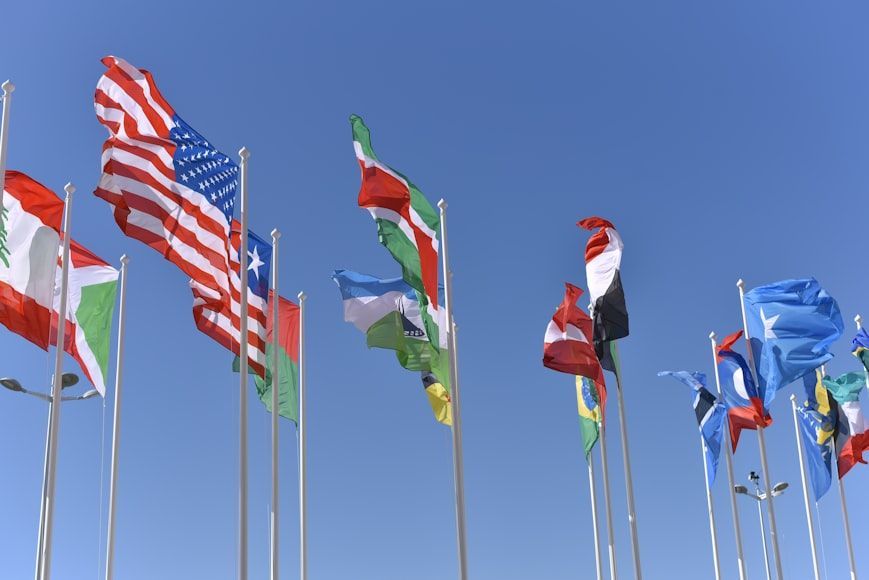
Did you know the symbolism behind these unique national flags?
A country's flag is a visual representation of an entire nation, and a symbol that unifies all those who belong to it. While most flags are easily recognizable, they often share common elements such as colors, designs, or meanings. Consider Poland and Indonesia, or Belgium and Germany.
Although flags from the same region or countries with a shared history may have similarities, some flags are so unique that they could never be mistaken for something else. Let's have a look at some of them!
This South Asian country, located between China and India, is known for being home to Mount Everest, much of the Himalayas, and as the birthplace of Buddhism. But Nepal is also known for another distinctive feature: its flag.
The Nepali flag shares its red, white, and blue colors with other Asian countries such as Thailand, Cambodia, and Laos, but its uniqueness comes from its shape, as Nepal is the only country in the world without a rectangular flag. Instead, it's formed by two joined pennants (or triangular banners). A sun and a crescent moon symbolize the hope for the country's longevity.
Mozambique's flag features three horizontal stripes—green, black, and gold—separated by thin white lines. On the left side, it has a red triangle. Up until now, not so different from many other flags. However, the red triangle contains several symbols: a yellow five-pointed star, a book, and, crossing over them, a gun (specifically an AK-47) and a hoe.
Each of these symbols has a particular meaning: the star symbolizes the country's solidarity with the world, the book represents education, the hoe, agriculture, and the gun, the nation's defence. However, some political parties have pushed for the gun to be removed as a symbol.
The Republic of Kiribati is a small island nation located in the Micronesia region. Composed of a series of atolls and one coral island, it lies where the equator meets the 180th meridian, placing it across the northern, southern, eastern, and western hemispheres.
Kiribati's flag features several national symbols: the upper half is red, and it showcases a golden bird—a symbol of freedom and mastery of the sea—flying over a rising sun. The lower half is blue with three wavy white stripes, representing the Pacific Ocean and the country's main archipelagos, while the 17 rays of the sun represent Kiribati's 17 islands.
The flag of Wales stands out from other European flags because of its prominent dragon. It is also one of only three national flags to feature this mythical creature, the other two being Malta and Bhutan. The Y Ddraig Goch (red dragon) is depicted in a passant attitude—heraldic terminology for "striding with a raised paw"—over a green and white background, colors associated with the House of Tudor.
Where does the dragon come from? The Welsh have always used the dragon as a symbol for their leaders, and a red dragon defeating the enemies of Wales appears in many tales. The dragon is also linked to the Arthurian legend and the prophecy of King Arthur's return to restore the island to the Celtic Britons.
Purple is a color present in very few national flags (four, to be precise), and Dominica's flag uses it in the most evident way. This Caribbean nation's banner has a green field crossed by a vertical and a horizontal band, each featuring yellow, black, and white stripes.
At the center, a red circle displays a Sisserou parrot surrounded by ten green stars. The Sisserou parrot, Dominica's national bird, has dark purple feathers on its chest and head, which are represented on the flag. This species is found only on the island and is considered critically endangered.
Known as the Golden Arrowhead, Guyana's flag stands out from other South American banners for its use of triangular shapes—one at the hoist and one extending across the flag—an element more commonly seen in Caribbean and Central American flags (e.g., Cuba, Saint Lucia, Jamaica).
The colors of Guyana's flag are deeply symbolic: red, gold, green, black, and white represent zeal, mineral wealth, agriculture, endurance, and the rivers that give the country its name, as Guyana means "land of many waters."
One of only three national flags featuring a dragon, Bhutan's banner has a meaning closely tied to the country's name. In the Dzongkha language, Bhutan is called Druk Yul, meaning "The Thunder Dragon Kingdom," a title also bestowed upon its monarch, the Dragon King.
Bhutan's flag is divided diagonally into two fields, one yellow and one orange, symbolizing the civil authority of the king and the country's Buddhist heritage. Over the dividing line, the white dragon (a symbol of purity) stretches across both fields, emphasizing the equal importance of civil and religious matters. The dragon holds jewels that represent the nation's wealth and security, and its snarling mouth signifies the defense of the country by its deities.
The Kingdom of Eswatini and the Republic of Kenya are two distinct nations, so they naturally have different national flags. However, they share one notable feature: both flags display a traditional shield at the center.
Eswatini's flag has three blue and red bands, separated by yellow strips. In the center, two spears are covered by a sideways Nguni shield, traditionally made from ox skin and reinforced with a staff. On the other hand, Kenya's flag is divided into three bands of black, red, and green, separated by white stripes. A Masai shield over two crossed spears at its center represents the defense of the country and its traditions.
The flag of this Melanesian country contains several symbolic elements representing its people. It's diagonally divided into red and black fields, two colors that Papua New Guinea tribes have used traditionally. On the lower black triangle, five white stars form the Southern Cross, one of the most important constellations in the Southern hemisphere.
The upper red triangle showcases the national bird, the Raggiana bird-of-paradise, in yellow. Fun fact: Papua New Guinea's flag was designed through a national contest, and the winning entry was submitted by a 15-year-old girl.
This island's flag has a unique element: it features the shape of the country at its center. The only other national flag to do this is Kosovo's flag, though Kosovo is not recognized as a sovereign state by all countries.
Intended to represent the harmony between Cypriots of Greek and Turkish descent, the flag's creators intentionally avoided colors and symbols associated with either group, opting instead for a white background with the island's silhouette in copper over two green olive branches.
Learn more
Preferences
Unsubscribe
© 2026, Dictionary Scoop. All rights reserved.
0 التعليقات:
إرسال تعليق
رسالة أحدث
رسالة أقدم
الصفحة الرئيسية
الاشتراك في:
تعليقات الرسالة (Atom)
Share With Friends
Search here
Sponsored Links
About us
Admin
عرض الملف الشخصي الكامل الخاص بي
recipes for healthy food
© 2008 | Créditos:
Templates Novo Blogger







0 التعليقات:
إرسال تعليق