|  | Source: BBC |
| Iran has seen repeated waves of protest for more than a decade. People have marched over prices, jobs, water, corruption, and political rights. But the protest cycle that began in 2022 changed the tone. It mixed social revolt with open rejection of the Islamic Republic. It also showed how wide the gap has become between the state and a large share of society. That gap is still there in 2026. It now combines three forces: a legitimacy crisis, an economic crisis, and a rights crisis. | The 2022 shock | In 2022, protests had risen after the death of Jina Mahsa Amini. She had been arrested by Iran's morality police over hijab violations. The slogan "Woman, Life, Freedom" spread fast. It united many groups: both women and men, students, workers, ethnic minorities, and parts of the urban middle class. The demands also widened. Many people did not only ask for police reform. They asked for freedom and an end to repression. | The state responded with force. There were many arrests. Trials were swift. Internet disruptions were used to slow coordination. But also, to limit media coverage. Global human rights bodies and NGOs have described serious abuses. These included unlawful killings and torture. | But the 2022 movement did not fully vanish. It changed shape. Street protests became less constant. But everyday resistance grew. One of the clearest examples has been the public defiance of hijab rules by many women, even under the risk of punishment. | | | | Congress to feature Trump on $100 Bill?
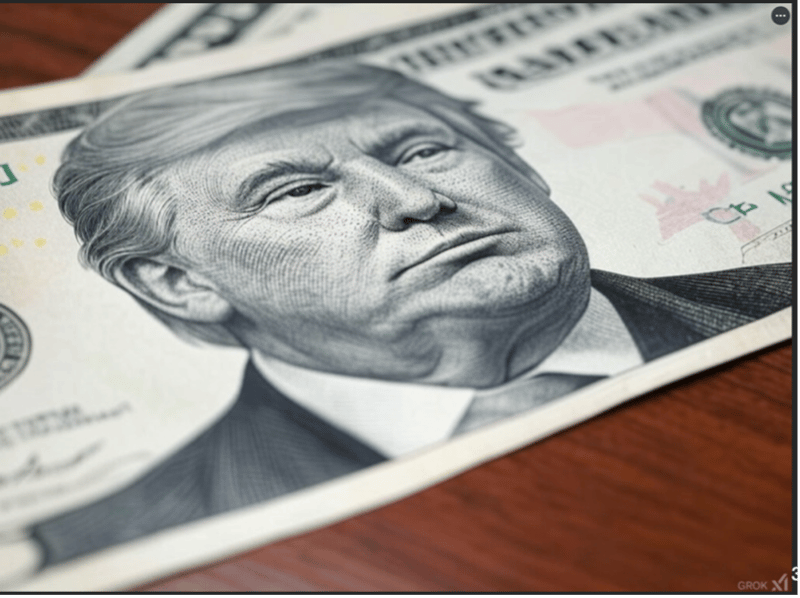
A shocking new plan was just introduced in Washington. The idea is to celebrate Trump's new "golden age" by placing him on the $100 bill.
As you'll see, it has little to do with the new Crypto Reserve…
Or Trump's ambitious plan for Artificial Intelligence…
Former Presidential Advisor, Jim Rickards says, "Trump's crowning achievement will be much, much bigger."
In the months ahead, he predicts, the government will release a massive multi-trillion-dollar asset which it has held back for more than a century. And this will give ordinary investors a chance to strike it rich.
Click here to see the full details. | |
|
| | The state's answer: tighter social control | After these protests, Iran leaned harder on surveillance, policing, and legal pressure. New rules and enforcement tools were introduced. They were to punish women and businesses that did not comply. UN experts also urged Iran to repeal the "Hijab and Chastity" law. UN warned it would increase penalties and harm women and girls. | This matters because hijab enforcement is not only about clothing. In Iran it is a symbol of who controls public life. When large numbers of women reject the rule in public, it signals a collapse of consent. The state can punish individuals. But it still struggles to restore broad social compliance without raising the political cost of repression. | Politics and legitimacy after the 2024 election | Iran also tried a familiar tool: controlled electoral change. In 2024, Pezeshkian won the presidency after the death of Raisi. He was seen as a reformist. Analysts said the vote showed public desire for change. But they also stressed that real power in Iran sits with the Supreme Leader and security institutions. This limits what a president can do. | This gap feeds cynicism. If elections do not change core policies, then protest becomes one of the only outlets left. At the same time, the state uses elections to claim legitimacy, even when turnout is low. | The 2025–2026 economic wave: anger returns to the streets. | A new wave grew around economic pain. Protests spread widely. They are tied to currency collapse, rising prices, and broader anger at the leadership's priorities. Authorities again used nationwide internet shutdowns. This is a familiar tactic from earlier protest periods. | This wave is important because it links new groups. Bazaar merchants, workers, and people who did not join a social-rights movement at first. Reuters reported protests spreading from Tehran's Grand Bazaar and highlighted arrests in the thousands. | Still, these waves have a weakness. They often lack unified leadership and a shared plan for what comes next. The slogans attack the Supreme Leader directly. But the movement remain a coalition of anger rather than a single political project. | Probabilities of regime change | Regime change in Iran is possible. But it is not the most likely near-term outcome. The Islamic Republic has built strong tools for survival. These include: | - loyal security forces, | - layered intel services, | - censorship capacity, | - a system that can repress without fully collapsing day-to-day governance. | The probability of regime change rises if several conditions align: | A split inside the ruling elite. Most successful regime changes involve cracks among top leaders, senior clerics, the Revolutionary Guards, or key economic networks. Without elite division, protests face a hard ceiling. Security force defection or neutrality. Large protests can win if police and military refuse orders or switch sides. Iran's system works hard to prevent that. Sustained nationwide strikes. Protests become far more dangerous for the regime when they turn into long strikes that shut down oil, transport, or major industry. A credible political alternative. Many Iranians reject the current system. But they do not all agree on what should replace it. Some voices promote a return to monarchy. But this option is not supported by all. A clear, trusted transition plan would matter.
| Today's patterns involve high anger, repeated waves, heavy repression, and weak coordination. The most realistic outlook for 2026 is continued instability rather than an immediate fall of the system. That said, Iran is also not "stable". Each new wave increases social opposition. It raises the chance of a sudden break if an unexpected trigger hits. | Decoding geopolitics isn't a job. It's survival. | Joy |
|



0 التعليقات:
إرسال تعليق