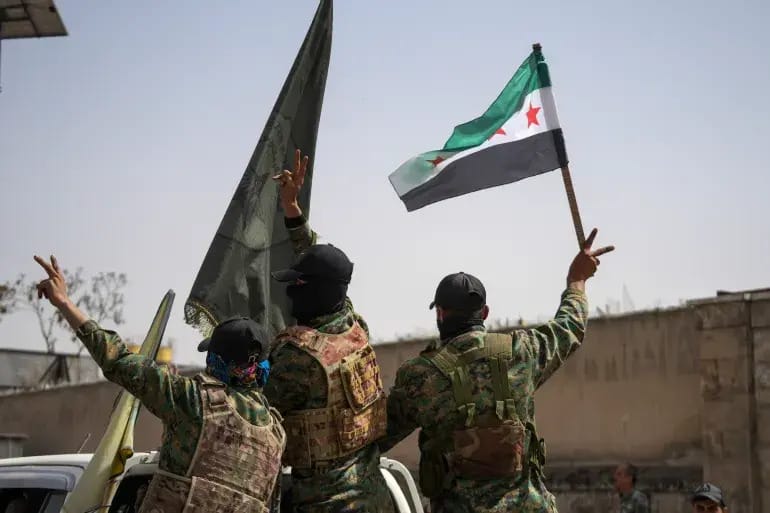
 | Source: Al Jazeera |
| The Kurds question is one of the most lasting and complex issues in the conflict in Syria. Since 2011, the Kurds of Syria have moved from political marginalization to partial self-rule. But their situation is still fragile. This comes with consequences for Syria and its neighbors. | Historical background | Before the civil war, Kurds made up around 10% of Syria's population. Under the rule al-Assad, many Kurds were denied citizenship and many rights. When protests turned into war, the regime withdrew forces from much of the northeast. This allowed Kurdish groups to take control of key areas. | The fight against ISIS and the rise of Kurdish power | The rise of ISIS changed everything. Kurds, especially the People's Protection Units (YPG), became the most effective local fighters. With support from the U.S. and its allies, they helped defeat ISIS. | This cooperation led to the creation of the Syrian Democratic Forces (SDF). By 2019, the SDF controlled large parts of northeastern Syria. This control includes oil fields and key agricultural land. | But this success came at a cost. Turkey views the YPG as linked to the PKK, which it considers a terrorist group. Turkey then launched military operations in northern Syria to push Kurdish forces away from its border. | | | | The situation in 2026 | The Kurds remain in control of parts of northeast Syria. But their autonomy is limited and contested. Syria's government has not accepted this self-rule. For Syria, the Kurds question blocks national reconstruction. Without a settlement, it remains fragmented. The areas controlled by the Kurds include important oil and wheat resources. Damascus badly needs them to rebuild the country. They insist on restoring full state authority. Talks between the state and Kurdish leaders have produced few concrete results. | | 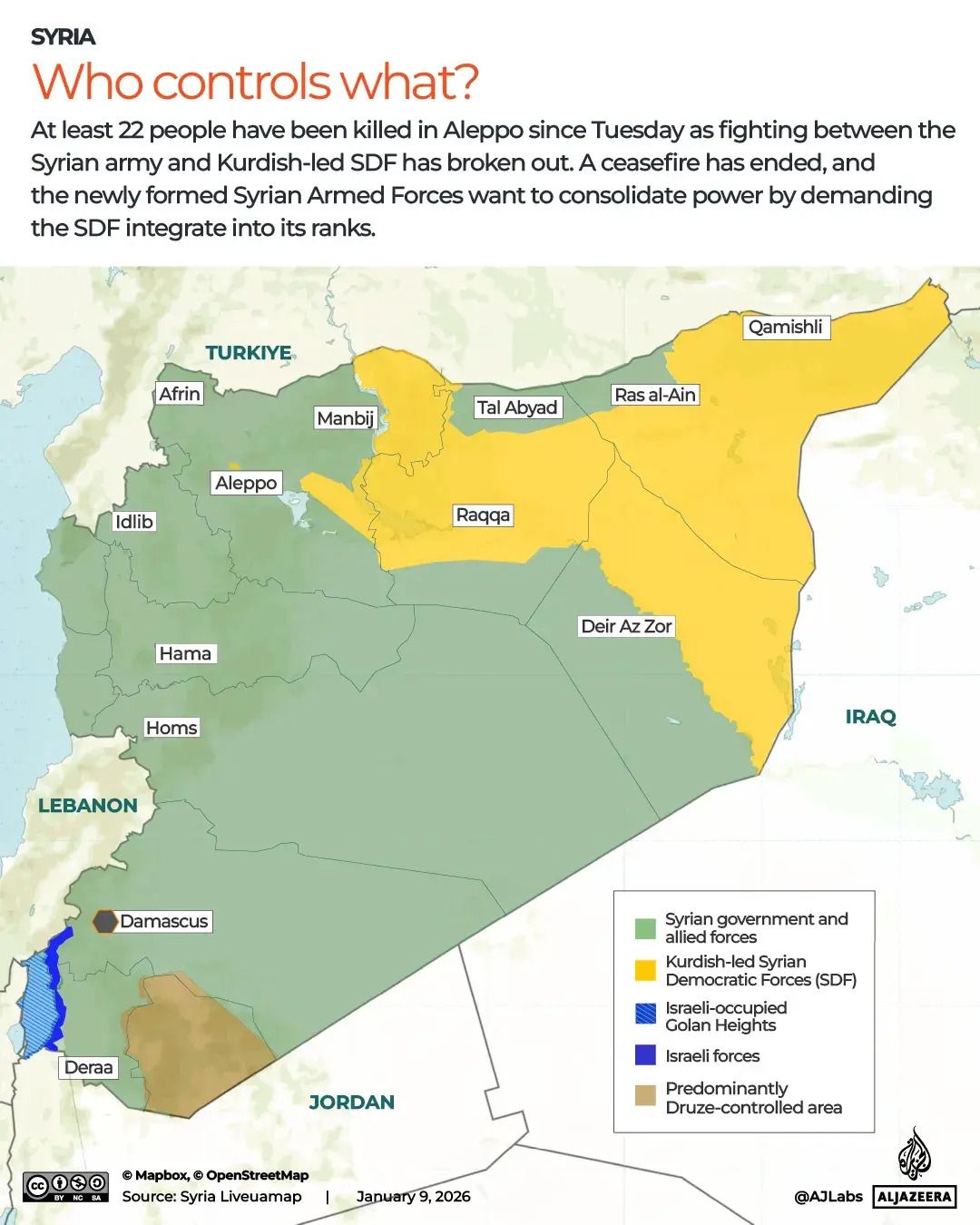 | Source: Al Jazeera |
| When the Assad regime fell in 2024, the former terrorist group HTS took power. The leader Al-Chaara became president. Deals were made last year between his government and the Kurds. These deals agreed to a local autonomy and to the Kurds integration into the state's institutions. In return, Kurds were to disarm. But after the massacres of Druzes in the south later that year by governmental forces, the Kurds refused to disarm. They claim that minorities are not safe in Syria. | These tensions turned into clashes earlier this month. Both parties accuse each other of attacks and war crimes. If these clashes spiral out of control, Syria could become a war zone again. This state has already been torn by war. | But let's not forget who took advantage of it in the past. ISIS has not disappeared. Sleeper cells continue to operate in desert areas. The U.S. recently launched strikes on their positions after the death of American soldiers. Plus, the Kurds control camps and prisons in Syria full of ISIS fighters and their families. Instability in Syria could lead to a resurgence. This makes the SDF a key security actor. This ongoing threat gives the Kurds some leverage with Western partners. | But Kurds issue also threatens regional powers stability. At the regional level, the Syrian Kurds are closely watched by Kurdish populations in Iraq, Iran, and Turkey. Any success or failure in Syria influences Kurdish movements across borders. This increases tensions in an already unstable region. | For Turkey, any form of autonomy in Syria is seen as a direct security threat. Turkey then fiercely supports Damascus. It is willing to reinforce Syria's army in what is said to be an anti-terrorist mission against the Kurds. But an intervention by Turkey could also hinder the peace process between the PKK and Ankara. In the meantime, Israel supports the latter and opposes Damascus. | Alongside with this ongoing situation, the U.S. are shifting away from the Middle East. This gives more freedom of action for external actors to influence the outcome. | Globally, the Kurdish case highlights a key contradiction in global politics. The West praises Kurdish fighters for defeating ISIS. But it stops short of supporting full autonomy or independence. It also remains silent on Turkey's action on Kurds. This damages Western credibility among local allies and reinforces the image of great powers using local actors for short-term goals. | Future prospects | As of 2026, there is no clear solution. Full Kurdish independence is unrealistic. But a return to strict central rule seems equally unstable. The most likely outcome is a form of limited autonomy within Syria. But that would have to be guaranteed by external powers. | Decoding geopolitics isn't a job. It's survival. | Joy |
|



0 التعليقات:
إرسال تعليق