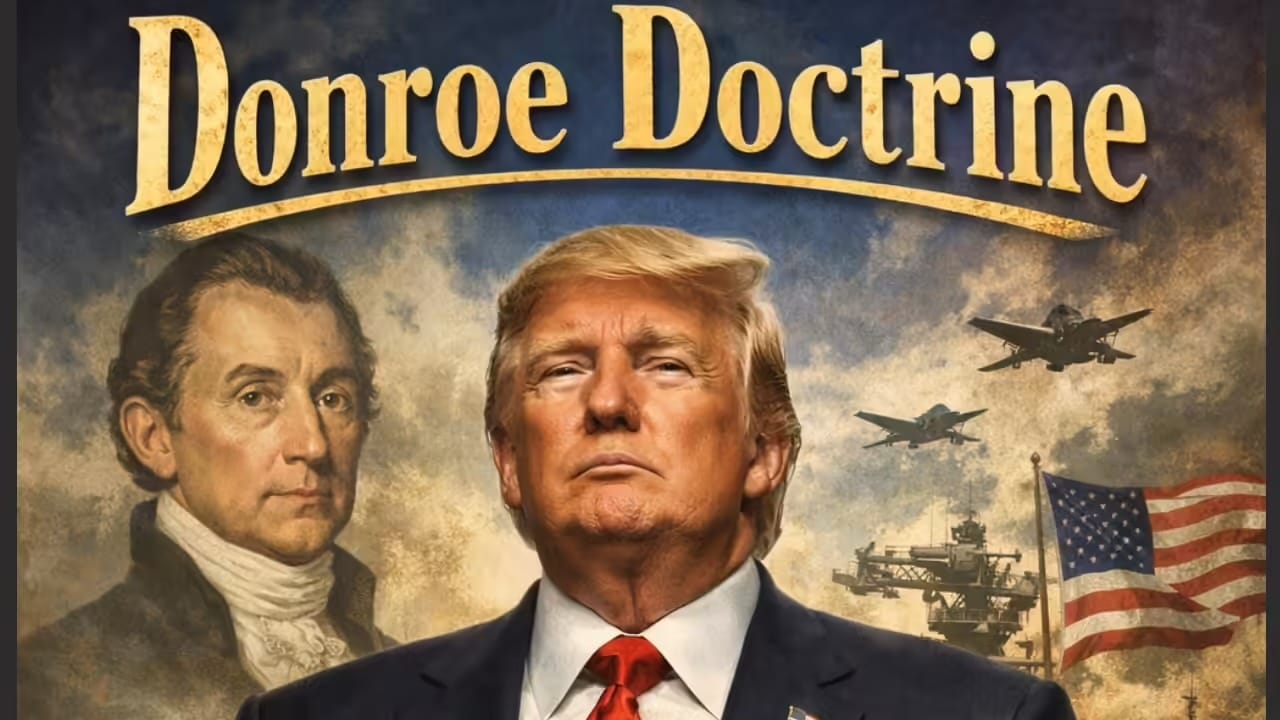
 | Source: Times of India |
| The Monroe Doctrine | It followed a speech by the U.S. president James Monroe in the 19th century. It is one of the key foundations of U.S. foreign policy. Any intervention in the affairs of the Americas by foreign powers can be seen as a hostile act against the U.S. At its origins this doctrine was meant for Europeans. But it spread to any foreign power. | This doctrine held three main ideas: | 1. No new European colonization in the Americas. | 2. Non-interference in American affairs. | 3. The U.S. stayed out of European conflicts and internal affairs in return. | At the time, the U.S. lacked a credible navy and army. But by the 20th century, it became fully able to enforce it. Over time, it evolved from a defensive principle into a reason for U.S. interventions. From Roosevelt to Trump, the core of this doctrine has been evoked many times by U.S. leaders. It has been variably denounced, reinstated, or reinterpreted. | | | | The | Man Who Predicted the iPhone 17 Years Early Speaks Out |
George Gilder's track record is legendary. He gave Steve Jobs the iPhone idea in 1990. He foresaw Qualcomm's rise BEFORE it soared 2,600% in one year.
Both sounded ludicrous at the time, but there's a reason he's been called "America's #1 Futurist."
Now he believes arare "super convergence" eventwill create more millionaires in the next few years than we've seen in decades.
A bombshell announcement scheduled just days from now could trigger it all.
Get details on the 3 steps to take before the switch flips.
|
|
| | Trump-era reinterpretation | Under Trump, this logic was modernized and simplified. The Western Hemisphere was framed as a strategic space. In this space external powers should have no decisive influence. This mostly targets China and Russia. | The so-called "Donroe Doctrine" is not an official doctrine. The label blends "Donald" and "Monroe". It is a term used by analysts and journalists. It describes how Trump reshapes the Monroe Doctrine for the 21st century. It is a return to an older geopolitical mindset. This mindset is based on power, exclusion of rivals, and regional dominance. | The Donroe Doctrine rests on three core ideas. | 1. America First applies to geography. Latin America is not seen as an area of partnership. It is a strategic backyard. Trade, aid, and diplomacy now are tools of pressure. | 2. Rival exclusion is key. China's investments (ports, energy, telecoms, etc.) are framed as threats. Russia's role in Venezuela, Cuba, and Nicaragua also is. | 3. Coercion replaces consensus. Sanctions, tariffs, and diplomatic isolation are preferred. | The geopolitical consequences | One big effect is the return of sphere-of-influence politics. Instead of a rules-based global order, great powers increasingly define "zones" where rivals are unwelcome. This trend weakens global norms. It also encourages similar behavior by other powers. We can think of Russia in Europe and China in the South China Sea. | A second consequence is the strategic diversification of Latin American states. Many states are wary of U.S. pressure. They have chosen not to fully align with Washington. Instead, they balance relations between the U.S., China, and other actors. This reduces U.S. leverage. It undermines the very control the Donroe Doctrine seeks to restore. | Plus, it contributes to global fragmentation. Sanctions, trade restrictions, and pressure accelerate the division of the world into competing blocs. This approach risks increasing resentment and nationalism. This will lead to instability. | Is it really the most effective approach to geopolitics? | The Donroe approach relies on coercion and exclusion rather than partnership. By treating Latin America as a sphere of control instead of a community of sovereign states, the U.S. undermines trust. This pushes regional actors to seek alternatives. States hit by pressure or sanctions often respond by deepening ties with rivals. Most of the time these are China and Russia. They both master the art of taking advantage of U.S. mistakes. This weakens U.S. influence rather than restoring it. | This approach also ignores economic realities. China is now a key trade partner and investor for many states in Latin America. Trying to block that presence is neither realistic nor sustainable. | Plus, it revives a 19th century power logic in a now multipolar world. It boosts other great powers to impose their own spheres of influence. Instead of reinforcing U.S. leadership, it accelerates global fragmentation. It breaks the norms the U.S. once promoted. | The Donroe Doctrine shows a broader shift toward power-based geopolitics. The core idea behind that is that power allows to do and take whatever is wanted. Power will also prevent or crush any forms of contest. It shows how ideas from the 19th century still shape modern strategy. But often, it comes with destabilizing outcomes. | Decoding geopolitics isn't a job. It's survival. | Joy |
|




0 التعليقات:
إرسال تعليق