Key takeaways this past week: | BTC in survival mode: ~$69K–$70K after ~$60K dip Extreme Fear (9/100) signals potential capitulation Institutional selling dominates; retail is trying to buy dips Strategic Reserve rumors provide floor, but macro reality bites
| The first full week of February 2026 proved to be one of the most volatile stretches in recent history. As the Greenland Shock of late January began to thaw for cryptocurrency markets, it was replaced by a brutal reality check for institutional holders and a shift in the global regulatory narrative. | Market Update - The Institutional Exit | The total crypto market cap experienced a significant shake-up, oscillating between $2.2 trillion and $2.4 trillion. While January was defined by political posturing, February has become a cleansing phase for the markets. | Bitcoin Price Action - After the January volatility, Bitcoin (BTC) saw a sharp decline, briefly dipping to $60,000 on February 5 before a weekend recovery. By February 8, BTC was fighting to hold the $70,500 level, as massive liquidations (totaling over $770 million in a single 24-hour window) flushed out over-leveraged longs. The Coinbase Premium - The Coinbase Premium turned negative during this window, reaching -$167.8. This signal suggests that U.S.-based institutional investors were the primary sellers, while global retail markets attempted to buy the dip.
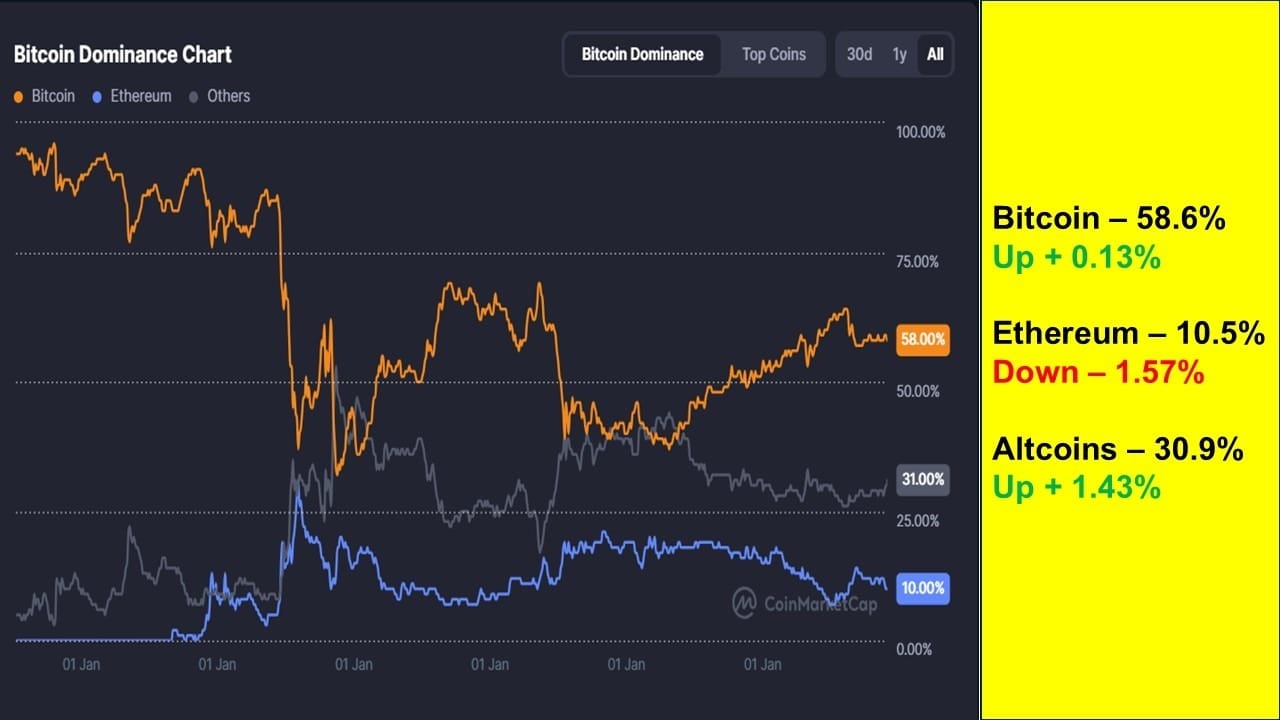
| Bitcoin Dominance & Sentiment | | | | Bitcoin's dominance remained in a tug-of-war around 54%–56%. While Bitcoin took a beating, it outperformed major altcoins like Ethereum, which saw deeper percentage drops (holding above $2,000). | The market is seeing a flight to quality, where BTC is increasingly treated as a proxy for tech-stock risk rather than a pure digital gold hedge. | Fear & Greed Index | | | | The index plummeted from the already shaky Fear zone (26) into Extreme Fear. This low double-digit reading is a rarity, reflecting peak panic. Historically, such levels have signaled a market bottom, but the current macro-economic pressure has kept smart money on the sidelines. | Politics & Global Moves | The narrative has shifted from Strategic Reserves to Fiscal Reality: | The Strategic Reserve Rumor - Speculation intensified on February 8 that the U.S. might finally formalize a Bitcoin Strategic Reserve. While unconfirmed, these rumors acted as a floor, preventing BTC from sliding back into the $50k range. Stablecoin Regulation Stalemate - A high-level White House summit between banks and crypto firms ended in a deadlock this week. The banking industry continues to oppose stablecoin yield-bearing accounts, stalling pending legislation in Congress. The ETF Exodus - Data from Morningstar revealed that nearly $5.7 billion was pulled out of spot Bitcoin ETFs between November and the first week of February, signaling a cooling of the institutional euphoria seen in late 2025.
| Top Gains & Losses | The leaderboard this week reflects a high-risk environment where only niche projects found momentum while former leaders corrected. | | | | REI (REI) - Renewed momentum in lightweight L1 chains and low-cap resilience during BTC dip; high-volume breakout up to 209% as traders rotated to undervalued infrastructure plays. | Vultisig (VULT) - Demand spiked up to 150% for on-chain security tools amid volatility and exploit fears; acted as a safe defensive bet in risk-off markets. | Collect on Fanable (COLLECT) - posted a strong 100% gain over the 7-day period, rebounding sharply from its all-time low of ~$0.02664 on February 3; the surge was driven by a combination of technical rebound mechanics, speculative momentum, and isolated resilience in its niche RWA/collectibles sector. | | | | Huma Finance (HUMA) - De-risking in RWA protocols; liquidity exits hit yield-bearing real-world assets hard amid regulatory stalemate with losses up to 47%. | River (RIVER) - Suffered heavy losses this past week, dropping around 42%, primarily due to intense profit-taking following its massive January ATH run to ~$87 | Stable (STABLE) - faced peg pressure and losses up to 41% as nearly $7 billion in stablecoin liquidity exited the market, driven by investor de-risking, fiat redemptions, and macro uncertainty as capital fled crypto entirely rather than rotating. | Voices from the Trenches | Michael Saylor (@saylor) - Remains unfazed, continuing to pitch the Bitcoin for Debt plan. He maintains that short-term price action is noise compared to the inevitable $81 trillion global reserve opportunity. Matt Hougan (@MattHougan) - The Bitwise CIO argued that volatility and risk are the market adapts to structural changes with Tokenization, the Stablecoin Supercycle, and Regulatory Progress. Raoul Pal (@RaoulGMI) - In a recent tweet, Pal urged followers to do nothing, suggesting that the current crash is just a 3% milestone in the journey to a $100 trillion market cap.
| Media Perspective | CoinDesk: Highlighted the Basis Trade collapse, noting that hedge funds are unwinding Bitcoin positions as arbitrage yields fall below 5%. Cointelegraph: Reported on the Japanese Bond Crash, ironically causing BTC to decouple from its inflation hedge narrative. The Block: Focused on the De-leveraging Phase, noting that total liquidations hit $2.6 B on February 5.
| Stay the Course | The market is currently in a Structural Shift. The institutional safety net failed to catch the $70,000 floor, but the retail-driven Strategic Reserve hype is providing a temporary ceiling. |
|
| | Quick Poll: | RATE TODAY'S REPORTWhat'd you think of today's edition? | |
|
| | This article is for informational purposes only. It should not be considered Financial or Legal Advice. Not all information will be accurate. Consult a financial professional before making any significant financial decisions. |
|
|
|




0 التعليقات:
إرسال تعليق