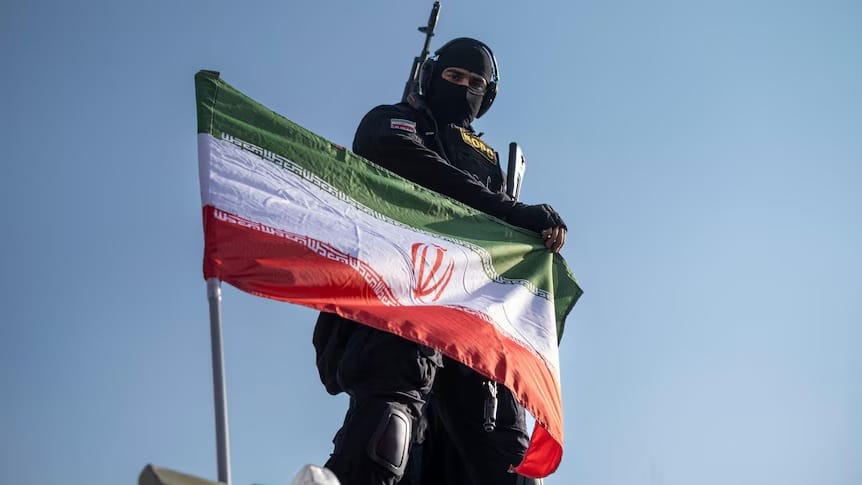
 | Source: ABC News |
| Quick historical reminder on the Islamic Revolution | The Islamic Revolution of 1979 changed Iran in a deep and lasting way. For many years, Iran was ruled by the Shah. He had strong power and close ties with Western states. Many people felt poor, ignored, and angry about corruption and foreign influence. Large protests spread across the country by the end of the 70's. Ayatollah Khomeini was a religious leader living in exile. He became the main voice of the opposition. The Shah left Iran. Khomeini returned and took control. A new Islamic Republic was created. Religion became the center of political power. Since then, Iran has been ruled by clerics. Religious law plays a key role in daily life and government. But the new leaders also parted from the West. Tensions appeared and are still very active. The biggest issues are the nuclear program, human rights, and the use of proxies. Iran often uses its proxies to influence the stability of the region and to oppose its sworn enemies (U.S. and Israel). These include Hezbollah, proxies in Iraq, and Houthis. | Many within Iran opposes the regime. The ongoing protests in the country prove that. Estimates say about 30 thousand protesters could have been killed by the regime. That repression relies mostly on the IRGC. | | | The Man Who Predicted the iPhone 17 Years Early Speaks Out |
George Gilder's track record is legendary. He gave Steve Jobs the iPhone idea in 1990. He foresaw Qualcomm's rise BEFORE it soared 2,600% in one year.
Both sounded ludicrous at the time, but there's a reason he's been called "America's #1 Futurist."
Now he believes arare "super convergence" eventwill create more millionaires in the next few years than we've seen in decades.
A bombshell announcement scheduled just days from now could trigger it all.
Get details on the 3 steps to take before the switch flips.
|
|
| | Focus on the IRGC | Creation. The IRGC was created by Khomeini in 1979. The goal was to form a force that would be loyal to the new leaders. The army was seen as possible source of opposition as it served the Shah. The Constitution gave the IRGC the mission to preserve the Revolution and the Islamic state. It was given strong power over security and politics. Over time, it became one of the most powerful entities in Iran. Its influence and reach are huge, both in the country and abroad. | Structure and roles. The IRGC is very different from the regular army in Iran. The regular Army, Artesh, defends the border and protects the state from foreign attacks. It follows classic rules and stays out of politics. The IRGC's role is to protect the regime and its leaders. Unlike Artesh, it also works abroad. It has influence on politics, media, business sectors and intel. | The IRGC is composed of different forces. Its regular forces include naval, ground and aerospace forces. They are involved in intel, cyber defense, ballistic missiles, and the nuclear program. The IRGC also has a volunteer paramilitary force: the Basij militia. This force oversees domestic security and the suppression of unrest. The Quds force is IRGC's elite operational unit. It conducts foreign missions and support allied militias abroad. | Economic activities. The IRGC also plays a key role in the economic landscape in Iran. According to estimates, the IRGC has ties over hundreds of companies. Its annual revenue exceeds $ 12 billion in business and construction. It has been awarded billions of dollars in the oil, gas, petrochemical industries, and key infrastructure projects. The IRGC is said to control about 50% of oil wealth in Iran through its subsidiaries. | Regional and global implications. The IRGC, through the Quds force, support different groups outside of Iran. These groups include: | - Hezbollah | - Shia militias in Iraq and Syria | - Houthis | - Hamas | These groups and Iran have common enemies. They help Iran exert influence and counter rival powers like Israel and the U.S. The IRGC finances and arms these proxies. By doing so, it disrupts regional stability and indirectly fights its rivals. | The IRGC also exerts pressure and threatens to act in the Strait of Hormuz. The Strait of Hormuz is a narrow sea passage where a large share of the world's oil transits every day. Iran borders this strait, which gives it strong strategic power. The IRGC plays a key role there through its naval forces. It uses fast boats, drones, mines, and missiles to monitor and threaten ships if tensions rise. It has often stopped or seized foreign tankers to send political messages. By controlling activity in the strait, the IRGC can pressure rivals, raise oil prices, and gain influence in regional and global politics. | Given the IRGC's disruptive actions and the domestic repression they apply on Iran's protesters, many countries added it on a terrorist list. The U.S., Israel, Australia, Canada and now the EU designates the IRGC, especially the Quds, as a terrorist group. | What are the consequences of being designated as a terrorist organization? | Being added to an official terrorist list brings strong legal and economics limits. The guards' assets held abroad can be frozen. Travel also becomes harder for them. Banks and companies are banned from working with the IRGC. Any person or company that gives money, services, or support to the IRGC face legal actions and sanctions. This also includes any work on civilian projects. The sanctions can be heavy fines or prison. This makes it harder for the IRGC to move funds. | This label deepens Iran's isolation. By hitting the regime's most loyal and powerful force, the goal is to increase the pressure. This decision by the EU happened after Trump already ramped up pressure on the regime. The U.S. builds up its forces in the Gulf and Trump is threatening to strike if Iran does not end its nuclear ambitions and stop killing protesters. | Decoding geopolitics isn't a job. It's survival. | Joy |
|



0 التعليقات:
إرسال تعليق