|
Warsh gives his first Jackson Hole keynote at 10 a.m. ET. The market has priced a neutral non-event. Meanwhile the 30-year hit 5.31%, a 2007 high, and the Fed is debating a hike, not a cut.
| |
|
|
|
August 28, 2026 • Friday morning edition • No hype, just perspective.
|
|
The Market Wants a Signal From Warsh. His Whole Career Says He Won’t Give One.
At 10:00 this morning, Kevin Warsh delivers his first Jackson Hole keynote as Fed chair, and the market has already decided what it will hear: not much. Sixty-nine percent of fund managers expect a neutral speech. That confidence is the setup, because the man at the lectern built his reputation arguing the Fed should tell markets less, and the bond market has spent August pricing a future he has not described yet.
|
|
|
What’s on the Table
|
• The event: Warsh’s first keynote as chair, 10:00 a.m. ET, under this year’s symposium theme, “Financial Innovation: Implications for Payments and Policy.” No policy move today; the next rate decision comes September 15–16, with fresh projections attached.
• What’s priced: A Bank of America survey has 69 percent of fund managers expecting a neutral tone; a CNBC poll found nearly half expecting no rate guidance at all. Neutral is the base case, which means any surprise cuts in one direction only.
• The debate is a hike, not a cut: The Fed held at 3.50–3.75 percent on July 29 in a 9–3 vote, with three regional presidents (Hammack, Kashkari, Logan) dissenting in favor of raising, the most hike dissents since 2016. September odds sit near one-in-three.
• The bond market’s verdict: The 30-year yield touched 5.31 percent on August 17, its highest since 2007. The 10-year sits near 4.67 percent and the 30-year fixed mortgage is back to 6.78 percent. Treasury stepped in on August 19 to double its buybacks of long debt; Stanley Druckenmiller warned the move undercuts the market’s credibility.
• Yesterday’s setup: Nvidia closed up about 8 percent near $227 on a $1.3 trillion customer spending pledge that only works if financing stays cheap. That assumption meets its author at 10:00 this morning.
|
|
| Sponsored |
RYSE Inc. · Reg A+ · Nasdaq $RYSS reserved |
|
|
PRICE INCREASE AUGUST 31 · Final window to invest at $2.50/share
|
|
|
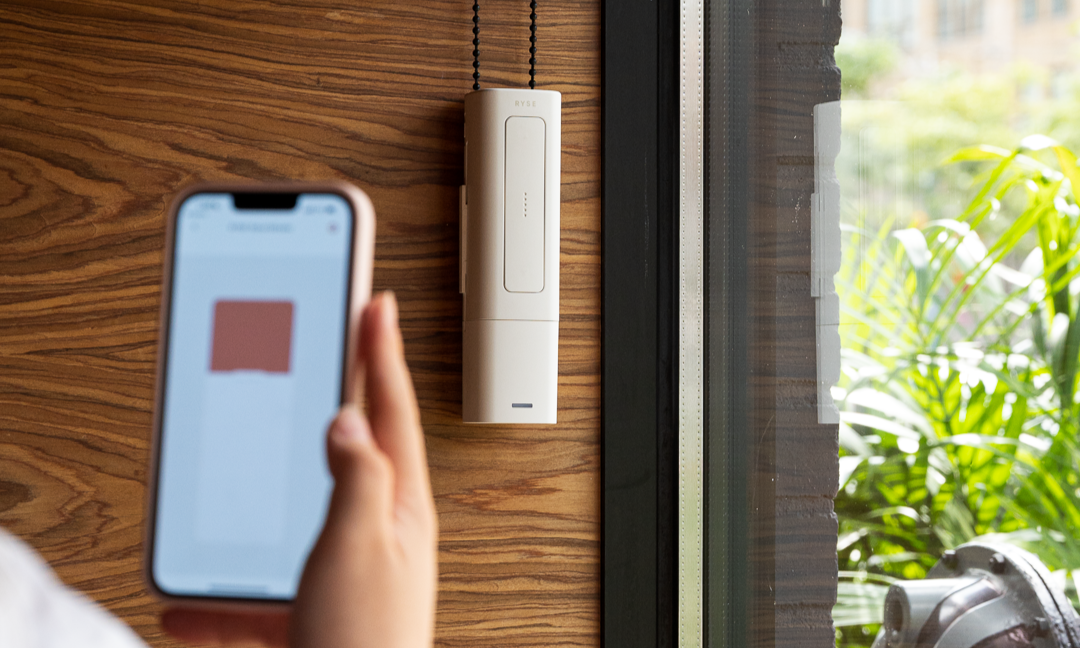
Investor briefing · Cleantech This isn’t just smart home. It’s cleantech. Roughly $35 billion in heating and cooling energy escapes through U.S. windows every year. RYSE’s AI-driven shading cuts up to 24% of cooling load. The share price recently rose to $2.50, up from $2.45. Buildings account for 75% of U.S. electricity use, and 92% of window shades are still controlled by hand. Nobody is around to lower them when the sun heats a room or raise them to capture natural light. RYSE retrofits existing window coverings with patented robots that learn user routines and use sensor data to manage light, heat, and privacy automatically. The result is up to 24% lower cooling energy and 20% lower lighting energy. That impact earned RYSE a CAD $4M (~$3.2M USD) cleantech grant, non-dilutive and non-repayable. Today the Reg A+ round is open at $2.50 per share through August 31 ahead of a potential listing under reserved Nasdaq ticker $RYSS.
24% Energy savings |
$3.2M Cleantech grant |
$15M+ Revenue |
10 Patents granted |
Current pre-IPO share price $2.50 / shareIncreases Aug 31 |
Invest at $2.50/share → ~$1,002 minimum · IRA eligible · No lock-up · $2.50 price through Aug 31 Bonus shares program, at the $2.50 price through Aug 31
| $2,500 |
+10% bonus shares |
| $10,000 |
+20% · effective $2.08/share |
| $100,000 |
+40% · effective $1.79/share |
| $250,000 |
+50% · effective $1.67/share |
Read the offering circular and risk disclosures at invest.helloryse.com.
Important disclosures. This is a paid advertisement for RYSE Inc. made pursuant to a Regulation A+ offering and involves risk, including the possible loss of principal. The valuation is set by the Company; there is currently no public market for the Company’s Common Stock. Nasdaq ticker “$RYSS” has been reserved by RYSE; any potential listing is subject to future regulatory approval and market conditions. Energy savings figures reflect studies of automated shading and may vary by building, climate, and use. SEC qualification does not constitute SEC approval of the merits. Share pricing and the timing of any price change are set by the Company and are subject to change without notice; the August 31 date reflects the Company’s currently scheduled price increase. RYSE Inc., 96 Spadina Avenue, Suite 500, Toronto, ON M5V 2J6, Canada |
|
|
Details
|
A market built on forward guidance is about to meet the chair who wants to take it away
At 8:00 local time on Friday, under the Tetons at Jackson Lake Lodge, the Kansas City Fed will post the text of Warsh’s speech to its website as he begins to read it. That is the whole event. No rate decision this week, no projections, no press conference. There is a man, a lectern, and whatever he chose to put on what he called, at his July press conference, a “blank piece of paper.”
The market has treated that blank page as a promise of silence. The Bank of America survey this week put 69 percent of fund managers in the neutral camp; the CNBC poll found nearly half expecting no guidance on rates at all. Neutral, in other words, is already in the price. And when the consensus leans this far to one side, the move that matters is the one almost nobody positioned for.
Here is what that consensus underrates. Warsh did not arrive at this lectern as a blank slate. He spent his years as a Fed governor, through the 2008 crisis and after, as the board’s most persistent internal skeptic of the very tools the market now leans on: large-scale asset purchases, and the practice of telling markets in advance what the Fed intends to do. He has said plainly he wants to offer less forward guidance, and at the June meeting he declined to submit his own economic projections. The blank page is deliberate. It is the method he described for years before he had the job.
Why a quiet Fed is a louder market. For more than a decade, the reader’s portfolio has been underwritten by a central bank that narrates its intentions. Rate decisions are “priced weeks in advance” precisely because the Fed spent years making sure they would be. Take the narration away and the market has to discover the Fed’s reaction function in real time, meeting by meeting, print by print. That discovery process has a name on a trading desk. It is called volatility.
The bond market already voted. While equity investors wait on the speech, the Treasury market has been answering the question on its own. The 30-year yield reached 5.31 percent on August 17, a level last seen in 2007. The 10-year sits near 4.67 percent, and the 30-year fixed mortgage has climbed back to 6.78 percent. When the Treasury Department stepped in on August 19 to double its buybacks of long-dated debt, the aim was to pull those yields down; Stanley Druckenmiller called the tactic a threat to the market’s credibility. Long rates are rising into an easing the Fed has not delivered and, at three hike dissents in July, may not deliver at all.
Where that leaves you. For the 60/40 holder, this is the uncomfortable part. Yesterday the equity side posted a gain, led by a single chip company promising a $1.3 trillion buildout that only pencils out if money stays cheap. The fixed-income side is telling you it will not. A 30-year mortgage at 6.78 percent costs roughly $690 a month more on a $400,000 loan than it did when rates were near 4 percent. Meanwhile cash and short Treasurys pay in the neighborhood of the Fed’s 3.5-to-3.75 percent floor, a real return you can hold while the framework sorts itself out. The question the speech will not settle is whether you are paid enough to own the risk a quiet Fed leaves on the table.
Warsh may say almost nothing this morning, and the market will still get its answer. It is already printed on the 30-year, at a yield America last saw in 2007. The speech is the theatre. The long end is the policy.
|
|
Harold Winston
Thirty years reading markets for a living.
No hype, just perspective.
|
|
|
|



0 التعليقات:
إرسال تعليق