|
Dear Reader, The filing landed Monday morning. Nobody covered it. The CEO of an AI data center company sold $6 million worth of his own stock in January 2026. He filed the paperwork with the SEC. The price: $36.42 a share. Yesterday, he filed again. This time the transaction type was a purchase. 55,803 shares at $18.04 apiece. Total: $1,006,086. Personal money. Open market. No 10b5-1 plan. He bought back in at exactly half the price he sold. There was no press release. No investor call. No analyst note upgrading the stock. Just a form filed with the SEC that most people never bother to read. That's what we do here. We read it.
INSIDE TODAY'S ISSUE
- THE SIGNAL: A CEO filed a $1M open-market buy at a 50% discount to his January sale. What a Form 4 at the 52-week low actually signals.
- THE FLOOR: Bond yields just cleared 5%. The sector rotating out fastest is not the one the headlines are blaming.
- WHALE WATCH: A Wall Street analyst just raised a price target to $41 on a stock trading at $18. What they see that the market has priced away.
- Porter Stansberry: Trump is replacing the U.S. dollar. Here's what to do now. (Porter & Co)
|
| Market |
Level |
Move |
| S&P 500 |
5,802 |
-0.7% |
| Nasdaq |
18,240 |
-1.4% |
| Dow |
43,180 |
-0.4% |
| 10-Yr Treasury |
5.04% |
+0.06 |
| Gold |
$2,728 |
+0.3% |
| Bitcoin |
$67,450 |
+1.2% |
MARKET SENTIMENT
Tech under pressure as 10-year yields hold above 5%. The rate level is not the problem. The rate direction is. Yields this high make discounted-cash-flow math brutal on growth names. Insider buying into this pressure is a different kind of signal.
This is what a Form 4 looks like when a CEO is done waiting. January 16, 2026: the chief executive of an AI data center operator filed a sale. 165,000 shares. Price: $36.42. Total proceeds: $6,009,300. The stock had been riding the AI infrastructure wave. It was near its highs. He took money off the table. That is what rational executives do. October 19, 2026: he filed again. This time, a purchase. 55,803 shares at $18.04. Total: $1,006,086. The stock had fallen more than 50% from that January high. The 52-week low printed at $17.65. He bought in at $18.04. That is six cents above the floor. No plan was cited. No 10b5-1 in place. Pure discretionary open-market buy. The company builds purpose-built data centers engineered for high-performance compute: AI training, machine learning, accelerated workloads. Hyperscale clients. Closed-loop cooling. The company reported $258.7 million in revenue last quarter. That is up 407% from the same quarter a year before. For the full fiscal year, revenue came in at $611.3 million. Up 167%. So why is the stock at $18? Financing costs. The buildout of hyperscale AI infrastructure is capital-intensive. Debt is expensive when the 10-year is printing above 5%. The market has decided the build is getting ahead of the balance sheet. The CEO just decided the market is wrong. One Wall Street firm is sitting on a price target of $41. The stock is at $18. The CEO just bought at $18. These are three separate data points that tell the same story. The filing was public. The SEC posted it. It did not show up in your newsfeed because no one put out a press release. That is exactly the point. The signal was there. You just had to know where to look. |
|
The 10-year Treasury yield broke above 5% this week. Real yields — that is, nominal minus core inflation — are now running near 2%. The last time that spread was this wide was 2007. When real yields climb, growth stocks get repriced. Every dollar of future earnings is worth less today when the discount rate is high. AI infrastructure names with negative free cash flow are priced entirely on future expectations. The math gets punishing fast. This is the environment the CEO mentioned above chose to buy into. The rate pressure is not new information to him. He runs the company. He knows the financing structure. He wrote a seven-figure personal check anyway. One thing to watch: the pattern of who is rotating out of high-growth names. Congressional trading disclosures show a 45-day lag from transaction to filing. The data currently visible reflects moves made in early September. Several members who sit on technology-adjacent committees reduced positions in AI hardware names in that window. They moved into utilities and defense. That is what the 45-day-old paper trail looks like right now. The system calls it transparency. We call it a 45-day head start in reverse.
Morgan Stanley updated its coverage on the AI data center operator at the center of today's signal. Price target raised to $41. The stock is trading at $18. That is a 127% gap between what a major institutional desk thinks the business is worth and what the market is paying today. Institutional price targets are not trade signals. They are research documents. But when a $41 price target and a $1 million insider buy land within days of each other at the same price — $18 — that is not a coincidence. That is confluence. Somebody always knows. They always do. The only question is whether you're reading the right filings. There is one more data point in this filing that most people are skipping over. It goes to the timing of the buy — specifically, what was announced three weeks before the purchase that makes the CEO's conviction even sharper. We'll get to it right after this. |
SPONSORED: PARADIGM PRESS
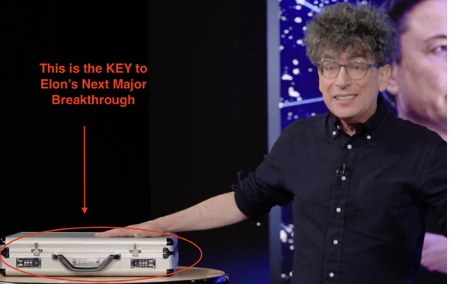
Renowned tech investor James Altucher – the man who called the rise of Nvidia, Apple and SpaceX years in advance – just uncovered Elon Musk's latest breakthrough idea.
And according to James, it's going to be even bigger than the SpaceX IPO – creating up to 1.8 million new millionaires over the coming years.
The pieces behind it are inside this briefcase – which he reveals 100% FREE in this video.
|
Back to the filing. Three weeks before the CEO filed his October 19 purchase, the company announced a deal to secure up to one gigawatt of potential power capacity in Finland. Hyperscale customer negotiations underway. The stock moved 3% that day. Then it faded. The market decided the deal was too speculative, too far out, too much capital needed. The CEO looked at the same announcement. He looked at the stock price: $18. He decided the market was leaving something on the table. So he put $1 million of his own money on the table instead. That is what Form 4 data can show you. Not what the company says about itself. What the people who run it actually do with their own money. The filing was public. The transaction was public. No press release required. To your profits, The Inside Bet |
|



0 التعليقات:
إرسال تعليق