Spotify Stock Climbs as Q3 Subscriber Growth and Profit Outlook Impress
Spotify reported Q3 subscriber growth that exceeded its own expectations, improved its gross margin, and offered an encouraging profit forecast for Q4.
Spotify (NYSE: SPOT) gave investors another reason to keep listening. The streaming company reported third-quarter subscriber growth that exceeded its own expectations, improved its gross margin, and offered an encouraging profit forecast for the final quarter of 2026.
Table of Contents
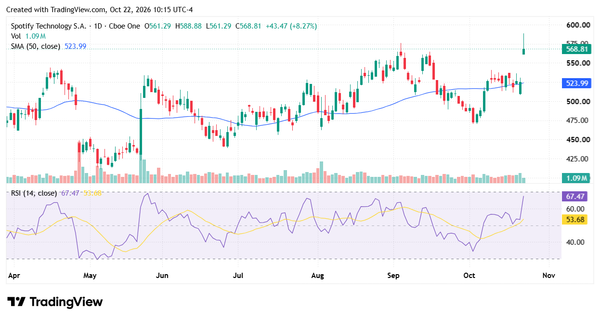
The report wasn’t perfect. Revenue came in slightly below Wall Street’s expectations, earnings per share missed estimates, and free cash flow declined. Still, shares moved higher as investors welcomed growth in paying customers and a stronger operating profit outlook.
Elon is gearing up to buy a tiny, publicly traded company.
Why? Because it holds the exclusive rights to a $16 trillion MOTHERLODE of the exact materials his empire runs on... rare metals like cobalt, manganese and lithium.
On January 1st, a new Pentagon rule cuts off his Chinese supply.
Today, it's a $5 stock... but once Elon makes his move, it could soar to $50 within 6 months.
Spotify ended the third quarter with 306 million Premium subscribers, up 9% from a year earlier. It added six million paying customers during the quarter, beating its own forecast by one million. Monthly active users, which include both paying customers and people using the advertising-supported service, reached 788 million.
That represented 11% annual growth and matched management’s guidance. Spotify reported subscriber and user growth across every region.
Those numbers matter because Premium subscriptions remain the company’s primary revenue source. Bringing in more paying listeners gives Spotify a larger base of recurring sales and more opportunities to introduce additional services.
Premium revenue increased 17% to €4.49 billion, supported by subscriber growth and higher average revenue per user. Advertising revenue rose 10% to €482 million. Together, those businesses generated quarterly revenue of €4.97 billion, up about 16% from €4.27 billion a year earlier. That was just below the €4.98 billion expected.
The slight revenue miss deserves attention. But it came alongside continued growth in both major parts of Spotify’s business.
Gross Margins Improve as Free Cash Flow Declines
Spotify’s gross margin reached 33%, compared with about 31.6% a year earlier. Put simply, the company kept more of each revenue euro after covering the direct costs of delivering its service. That improvement is meaningful. A growing subscriber base becomes more valuable when the business can serve those listeners more profitably.
Operating income increased 15% to €672 million, narrowly topping the €670 million Bloomberg consensus cited in the report. However, earnings per share came in at €2.48, below analyst expectations. Investors should distinguish between operating income and the final earnings figure, which also reflects items outside core operations.
There were other reasons to avoid getting carried away. Free cash flow fell 9% to €735 million from €806 million a year earlier. Meanwhile, operating expenses reached €967 million, with spending pressure coming from marketing, cloud services and artificial intelligence.
Those investments could support future growth. But investors will want evidence that the spending attracts customers, improves retention or creates additional revenue.
Spotify Expands Audiobooks and Creator Offerings to Fuel Growth
Spotify is also working to make its service useful for more than music. The company announced plans to expand audiobooks to more than 180 markets by year-end, bring its Spotify Partner Program to 35 additional markets and launch Creator Memberships.
Co-CEO Alex Norström described expanding selection as an important part of Spotify’s growth strategy. More content can attract new listeners while giving existing users additional reasons to return. Co-CEO Gustav Söderström also offered an interesting perspective on artificial intelligence. His argument is that people may welcome AI taking over tedious tasks, but entertainment serves a different purpose. Listeners generally want to experience a song, rather than have software replace that experience.
The man CNBC once called “The Prophet” has a new warning for America.
Whitney Tilson believes a major divide could emerge in the coming months, with significant implications for your investments.
Some portfolios could benefit, while others could face serious losses.
In 2000, Whitney warned about the dot-com crash. He also predicted the bankruptcies of Bear Stearns and Lehman Brothers. And he called the bottom of the stock market on 60 Minutes.
He's sharing what he sees ahead and how investors can prepare.
Spotify Q4 Earnings Outlook Raises Expectations for Growth
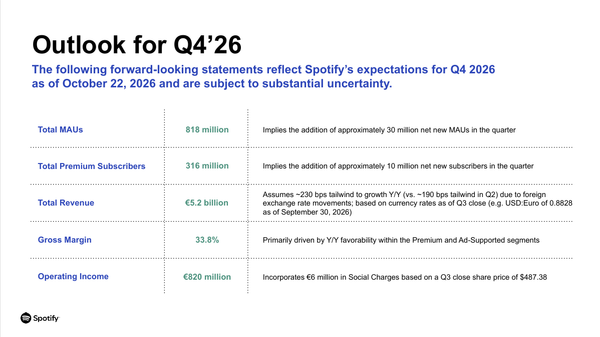
Spotify expects fourth-quarter operating income of €820 million and Premium subscribers of 316 million. Both forecasts exceeded the Bloomberg consensus figures cited in the earnings coverage. Reaching that subscriber target would mean adding another 10 million paying customers during the quarter.
Management also projected a gross margin of 33.8%, suggesting further improvement from the third quarter. However, its €5.2 billion revenue forecast and target of 818 million monthly active users fell slightly below expectations.
In short, Spotify is attracting paying listeners and improving profitability while expanding its entertainment offerings. The next test is whether those efforts produce stronger cash generation as spending grows. For shareholders, sustained progress on subscribers, margins, and cash flow would make this quarter’s encouraging results more convincing over time.




0 التعليقات:
إرسال تعليق