|
MARKET PULSE
Rates kept pressure on private money this week.
Core prices rose 3.3% from a year ago in October. That was the fastest pace in about three years. Growth was also revised up. Kalshi's December rate hike contract traded near 93 cents. A hike would raise what floating-rate borrowers pay.
Stocks swung hard. The S&P 500 rose 4.7% Monday, its best day in more than a year and a half. Nvidia got its CEO back and added almost $1 trillion in value. Then chip stocks fell again. Credit barely joined the rally.
The year's biggest AI listing set a public price, and it moved hard both ways. Private prices were set out of view, by fewer buyers. Here are six themes that showed it.
PREMIER FEATURE
Everyone’s Fighting Over the Same Seven Stocks
The Magnificent Seven worked when investors were early.
Now they’re crowded, bloated, and priced for perfection.
Market leadership doesn’t disappear — it rotates.
Our analysts believe the next group of leaders is already emerging quietly.
Their FREE report reveals 7 stocks positioned to benefit as leadership shifts.
Get the entire list free today, before the crowd catches on.
THEME 1
Anthropic Closed Below Its IPO Price. Lenders Stayed Wary.
Anthropic (ANT) priced its IPO at $83. On Tuesday it closed just under $82, its first close below that price. On Wednesday it fell as low as $73.85, then closed just under $83. It jumped about 11% Friday to close at $91.76. Thirteen leveraged funds tied to the stock began trading Monday. Only about 7% of its shares trade freely, by FM's estimate.
Credit did not join Monday's rally. The largest high-yield bond fund rose only about 0.2% that day. CoreWeave (CRWV) rose more than a fifth Monday, then closed about 12% lower Tuesday. Firmus, which Nvidia backs, shelved an IPO in October. It may now sell a bond of about $1.5 billion at about 8%, a report said.
The Signal
The biggest AI listing of the year has traded on both sides of its offer price in its first weeks. Funds that hold late-stage AI stakes may mark them against it. Few shares trade, so a few buyers set the price and leveraged funds can swing it. Lenders are not pricing in relief. An 8% coupon on a Firmus bond would show what AI builders still pay to borrow.
THEME 2
Private AI Prices Rose. Insiders Set Most of Them.
Stripe's next staff share sale is set to value it above $200 billion, a report said. That is more than a quarter above its February price. Existing investors are the likely buyers.
Sierra is raising money at $30 billion, about double its May price. It says its yearly recurring sales top $400 million. Databricks is in early talks at about $225 billion. It was valued at $190 billion in August. Cognition is in talks at about $75 billion, up from $48 billion in September.
The Signal
Private AI prices only went up while public AI prices swung both ways. Sierra's price works out to about 75 times its stated yearly sales. A tender priced by existing holders shows what insiders will pay, not what the public would. These prices could prop up year-end marks. A round priced by outside buyers well below these levels would weaken that support.
FROM OUR PARTNERS
Wall Street Legend's Stocks to Buy – 84% OFF
It's not too late to get in on Marc Chaikin's huge Black Friday flash sale. Until Monday only, he's offering 84% off the Power Gauge Report PLUS a year of free access to his Power Gauge Rating system.
Marc's system flashed BULLISH on all of the Magnificent Seven stocks before they soared. To see what it’s "bullish" on now, click here to access Marc's American Atlas Portfolio –PLUS your free year of his system.
This ad is sent on behalf of Chaikin Analytics, 201 King Of Prussia Rd., Suite 650, Radnor, PA 19087. If you would like to optout from receiving offers from Chaikin Analytics pleaseclick here.
THEME 3
Fund Holders Wanted Out. The Line Moved Slowly.
Holders offered about two-thirds of the shares in HarbourVest's listed fund at 10% below asset value. The $400 million offer buys only a little over a tenth of each holding. The shares had traded about 25% below asset value. Two big credit funds sold to savers also rationed exits. BCRED and ASIF each met half or less of their latest exit requests.
Managers found other ways to get cash. A Goldman Sachs credit fund is selling about $1.5 billion of loans. The price is just under 95 cents on the dollar, PitchBook reported. That looks close to where the fund has carried them, but the basis of the price has not been disclosed. New York's state pension is weighing a deal of about $4 billion. Stakes in about 20 credit funds would back it. It would sell a debt slice and keep the rest.
The Signal
Cash is open to fund holders, but only in small slices or at a cost. HVPE holders would take 10% less than stated value, and most still could not sell. If Goldman's price was set on the same basis as the fund's marks, seasoned loans can sell near them. That would back the values on private loans. A wider discount on the next sale would challenge it.
THEME 4
Cash Buyers Circled Listed Firms. Some Need Partners.
Sanofi agreed to pay $175 a share in cash for Insmed (INSM). The deal is worth about $41 billion. The price is 46% above where Insmed traded before talks were reported. Sanofi pays with cash and debt.
GTCR said in a filing it may submit a proposal for Global Payments (GPN). It owns about 16%. Blackstone and two other firms may help fund a bid, Reuters reported. They are discussing equity or preferred equity. Banks have offered CVC up to €11 billion of debt for a possible Verisure bid, Bloomberg reported.
A stock deal lost value as its buyer fell. CrowdStrike agreed to buy Zscaler in an all-stock deal valued at about $44 billion. Its own drop cut the premium from 34% to about 22% in a day.
The Signal
Cash bids hold their value, while stock bids move with the buyer's shares. Buyout firms are pooling their money to fund large take-privates. More equity can mean less borrowing. It spreads the risk but splits control. A firm price for Global Payments or Verisure would show the money is in place.
PARTNER SPOTLIGHT
Why Did Trump Just Ban America's Most Powerful AI?
It's not Nvidia. It's not OpenAI. It's not Google.
It's a San Francisco AI lab whose technology is used by eight of the ten largest companies in America — and which Bloomberg calls the highest-revenue AI company on earth.
Trump banned it from every federal agency and the Pentagon blacklisted it. The reason isn't what you think. Full details here.
THEME 5
Sponsors Sold Units to Corporate Buyers.
Qnity agreed to pay $840 million in cash for a Meridian Adhesives unit. American Securities owns Meridian. The price is about 8.4 times this year's expected sales.
KKR (KKR) sold CIRCOR's aerospace unit for about $2.6 billion. KKR says it paid $1.8 billion for all of CIRCOR. Permira sold Quotient Sciences to IQVIA and gave no price. Stonegate, owned by TDR, is selling 304 pubs to Heineken to cut debt.
The Signal
Company buyers are paying well for units tied to AI and defense. Selling in pieces brings cash back in stages. Each unit goes to the buyer that values it most. Some of these prices stay private, so fund backers cannot yet judge returns. A carve-out sold far below these levels would weaken this read.
JUST FOR YOU (SPONSORED)
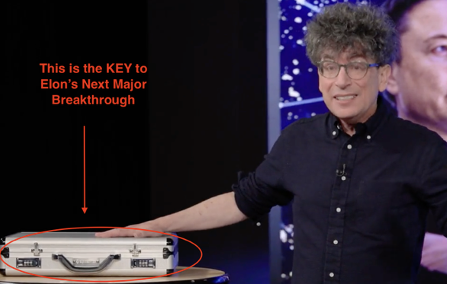
Renowned tech investor James Altucher – the man who called the rise of Nvidia, Apple and SpaceX years in advance – just uncovered Elon Musk’s latest breakthrough idea…
And according to James, it’s going to be even bigger than the SpaceX IPO – creating up to 1.8 million new millionaires over the coming years.
The pieces behind it are inside this briefcase – which he reveals 100% FREE in this video.
Click here now for all the details.
THEME 6
Where Equity Ran Out, Lenders and Creditors Took Over.
Vivid Seats' lenders agreed to swap their loans for 80% of its shares. Existing holders, including GTCR, keep about 20%. Its net debt would fall by about two-thirds.
Poundland went into administration after no buyer would fund the whole chain. Its owner, Gordon Brothers, holds most of a £30 million loan made to the chain. America's Car-Mart filed for Chapter 11. Its lenders will put in up to $60 million of new loans.
The Signal
Lenders now set terms where owners cannot add cash. At Vivid Seats, they take control without a court case. Poundland's value may be set by store-by-store sales. Across the week, public buyers repriced AI in the open, in both directions. Private prices were set by fewer hands, from insiders to cash buyers to lenders.
Big Pharma Stopped Watching AI Drug Discovery. It Started Paying.
Sanofi has paid one AI biotech $144 million in upfront and milestone payments. Eli Lilly invested $40 million in another. Bristol Myers Squibb is putting a third company's AI co-scientist to work inside its own research organization.
The industry's biggest drugmakers used to watch this technology from the sidelines. Now they're customers.
We profiled the 5 companies leading AI drug development in a new FREE Special Report: AI Moves Into the Biotech Lab.
We'll text it straight to your phone.
Get the Free Report by Text →
|



0 التعليقات:
إرسال تعليق